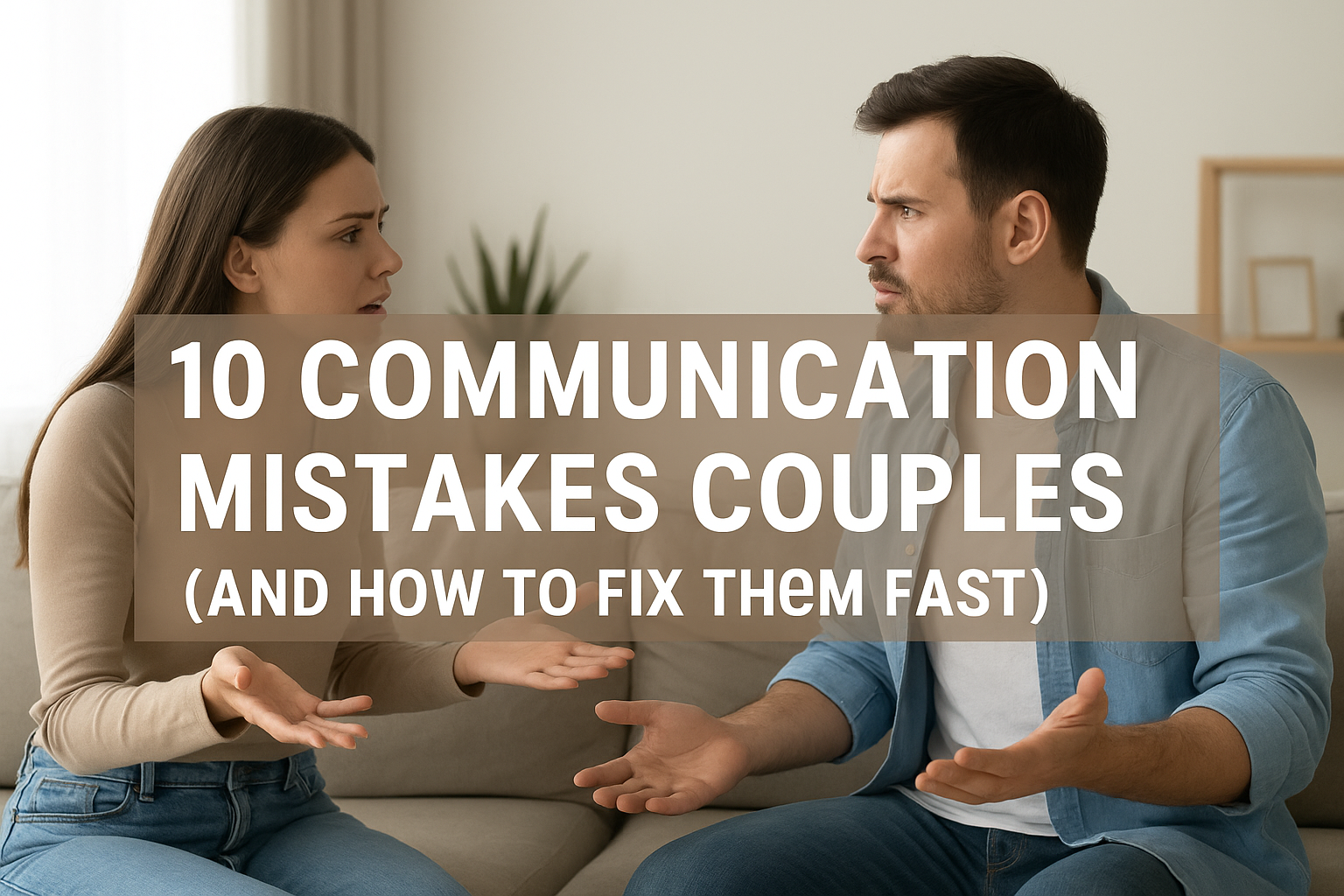
10 Communication Mistakes Couples Make (And How to Fix Them Fast)
Healthy communication doesn’t fall from the sky—it’s built with patience, understanding, and the right tools.
Most couples don’t argue because of big problems…
They argue because of communication habits that get worse over time.
If you and your partner feel misunderstood, disconnected, or stuck in repeating arguments, this guide will help you spot the mistakes and fix them using the Conflict-Resolution Workbook for Couples:
👉 https://oppler.shop/conflict-resolution-workbook-for-couples-printable-relationship-communication-ebook-improve-listening-resolve-arguments-rebuild-trust/
Let’s break down the most common Communication Mistakes Couples Make—plus easy, actionable solutions.
1. Talking to Win Instead of Understanding
Many couples fall into “debate mode” where the goal becomes proving the other person wrong. This leads to defensiveness and emotional distance.
Fix It:
Use the long-tail technique: “how to communicate without fighting in relationships.”
Pause and ask: “Do I want to be right, or do I want to be close?”
The workbook includes exercises that retrain your responses so you focus on understanding instead of winning.
2. Interrupting or Finishing Each Other’s Sentences
This usually happens when emotions run high.
Fix It:
Use a 5-second pause rule.
Let your partner finish completely before responding.
The workbook teaches active listening exercises for couples to make conversations calmer and more productive.
3. Assuming Instead of Asking
Mind-reading creates unnecessary conflict.
Fix It:
Use clarifying questions like:
“What did you mean when you said…?”
“Can you explain how you felt in that moment?”
These small habits reduce misunderstandings dramatically.
4. Avoiding Important Conversations
Avoidance builds walls in the relationship.
Fix It:
Schedule a weekly “connection talk.”
Sit down without distractions and discuss feelings, needs, and updates.
The workbook provides guided prompts for relationship check-ins that make these talks easier.
5. Bringing Up the Past During Every Argument
When past wounds keep being reopened, progress becomes impossible.
Fix It:
Focus on one issue at a time.
Use the workbook’s step-by-step conflict-resolution templates to stay focused and structured.
6. Using Blame and Accusation Language
Sentences like “You never…” and “You always…” shut your partner down.
Fix It:
Switch to “I feel” statements, such as:
✔ “I feel ignored when…”
✔ “I feel hurt because…”
This reduces defensiveness and builds empathy.
7. Lack of Appreciation and Positive Communication
Couples often speak about problems more than gratitude.
Fix It:
Develop the habit of daily appreciation.
Even one sentence like “Thank you for helping today” creates emotional safety.
The workbook includes a gratitude communication section that helps couples strengthen affection.
8. Talking When Emotional Instead of Taking Space
When emotions spike, rational listening disappears.
Fix It:
Use the “Pause, Then Discuss” method:
- Step away
- Breathe
- Reconnect when both are calm
The workbook teaches emotional regulation tools for couples to prevent conversations from turning into fights.
9. Expecting Your Partner to Know Your Needs Automatically
Unspoken expectations lead to disappointment.
Fix It:
Say what you need clearly and respectfully.
The workbook includes a “Needs Identification Worksheet” that helps you express needs without guilt or pressure.
10. Letting Small Issues Build Until They Explode
Silent buildup can do more damage than arguments.
Fix It:
Address issues early, kindly, and in small doses.
Use the workbook’s “micro-communication checklists” to maintain daily relationship health.
🧠 How the Conflict-Resolution Workbook Helps Fix All These Mistakes
The workbook is designed to help couples:
1- Improve listening skills
2- Reduce unnecessary arguments
3- Rebuild emotional trust
4- Learn healthy communication patterns
5- Share feelings without conflict
6- Solve problems together peacefully
It includes printable exercises, guided discussions, templates, and emotional tools you can use instantly.
👉 Get the workbook here:
https://oppler.shop/conflict-resolution-workbook-for-couples-printable-relationship-communication-ebook-improve-listening-resolve-arguments-rebuild-trust/