The Ultimate Guide to Using a Budget Planner to Take Control of Your Finances

Managing money can feel overwhelming when monthly bills, unexpected expenses, subscriptions, and financial goals all compete for attention at the same time. Many people want to save money, improve spending habits, and build stronger financial routines, but they often struggle because they lack a clear system. That is where a budget planner becomes incredibly valuable.
A good budget planner is more than a spreadsheet or checklist. It becomes a complete financial organization system that helps simplify budgeting, track expenses, monitor savings, and improve money management habits over time.
Whether you are trying to stop overspending, organize monthly expenses, create a savings plan, or gain more confidence with your finances, having the right budgeting system can completely change the way you manage money.
The Empowered Budgeting Toolkit was designed to help simplify personal finance planning through practical templates, savings trackers, monthly budgeting tools, and financial organization systems that are easy to use.
In this guide, you will learn:
- Why budgeting matters
- How a budget planner improves financial organization
- The biggest mistakes people make with money management
- How to create a realistic monthly budget
- How expense trackers improve spending awareness
- Why savings systems matter
- How financial planning reduces stress
- The benefits of using budgeting templates
- How digital budget planners simplify money management
- How financial organization improves long-term wellness
By the end of this article, you will understand how a budget planner can help you build better financial habits and take control of your money with greater confidence.
Why Financial Organization Matters More Than Ever
Modern life makes it easy to lose track of money.
Automatic payments, online shopping, food delivery apps, subscriptions, digital wallets, and impulse purchases all create financial pressure that can slowly build over time.
Many people feel stressed about money not because they never earn enough, but because they lack a clear financial organization system.

Without financial organization, it becomes difficult to:
- Track spending
- Save consistently
- Plan monthly expenses
- Avoid unnecessary purchases
- Monitor financial goals
- Reduce financial stress
- Improve savings habits
This is why using a budget planner can be extremely helpful.
Instead of feeling overwhelmed by finances, a budgeting system creates structure.
Financial structure leads to:
- Better awareness
- Better spending decisions
- More savings opportunities
- Improved financial habits
- Greater confidence
- Less stress
A budget planner turns scattered financial behavior into organized financial management.
What Is a Budget Planner?
A budget planner is a financial organization tool designed to help people track income, expenses, savings goals, monthly spending, and financial priorities.
A digital budget planner often includes:
- Monthly budget templates
- Expense trackers
- Savings trackers
- Financial goal worksheets
- Spending categories
- Debt tracking systems
- Budget calculations
- Financial planning sections
The purpose of a budget planner is not restriction.
The real purpose is awareness.
Many people avoid budgeting because they assume budgeting means removing enjoyment from life.
In reality, budgeting helps people:
- Spend with more confidence
- Understand spending patterns
- Reduce financial confusion
- Improve money habits
- Create realistic financial plans
- Save more effectively
The budgeting toolkit combines budgeting tools, savings systems, financial organization templates, and planning resources into one easy-to-use digital finance system.
Common Financial Problems People Face
Many people struggle financially for the same reasons.
Understanding these problems is important because recognizing financial habits is the first step toward improving them.
Overspending Without Realizing It
Small purchases often seem harmless individually.
However, coffee runs, food delivery, subscriptions, impulse shopping, and convenience purchases can slowly create large monthly spending totals.
An expense tracker helps identify these patterns.
Once spending becomes visible, it becomes easier to make smarter financial decisions.
Lack of Monthly Planning
Without a monthly budget planner, many people spend money first and think about bills later.
This creates stress near the end of the month.
A budgeting system helps organize:
- bills
- savings goals
- expenses
- income planning
- financial priorities
Difficulty Saving Money
Saving money becomes difficult without structure.
People often save inconsistently because they do not track spending carefully enough.
A savings tracker helps make saving progress visible and motivating.
Financial Stress
One of the biggest causes of financial anxiety is uncertainty.
When people do not know:
- where their money goes
- how much they spend
- how much they save
- what bills are coming
stress increases quickly.
A budget planner reduces uncertainty through organization.
Benefits of Using a Budget Planner
Using a budget planner consistently can create significant improvements in financial organization and money management habits.

Better Spending Awareness
One of the most powerful benefits of budgeting is awareness.
Many people underestimate how much they spend every month.
Tracking expenses creates financial clarity.
Once spending becomes visible, it becomes easier to:
- reduce wasteful purchases
- improve spending habits
- prioritize important expenses
- increase savings opportunities
Easier Monthly Planning
A monthly budget planner helps organize:
- fixed expenses
- variable expenses
- savings goals
- spending categories
- monthly priorities
This creates financial structure.
Reduced Financial Stress
Financial organization often reduces anxiety because people gain more control over their money.
Instead of guessing where money went, budgeting creates visibility.
Improved Savings Habits
Savings trackers help build consistency.
Even small savings goals become easier to maintain when progress is visible.
Better Financial Confidence
Budgeting improves confidence because people begin understanding their finances more clearly.
Financial awareness creates stronger decision-making.
How a Monthly Budget Planner Works
A monthly budget planner organizes income and expenses into categories.
This helps users understand:
- how much money enters each month
- how much money leaves each month
- which expenses are necessary
- which expenses can be reduced
- how much can realistically be saved
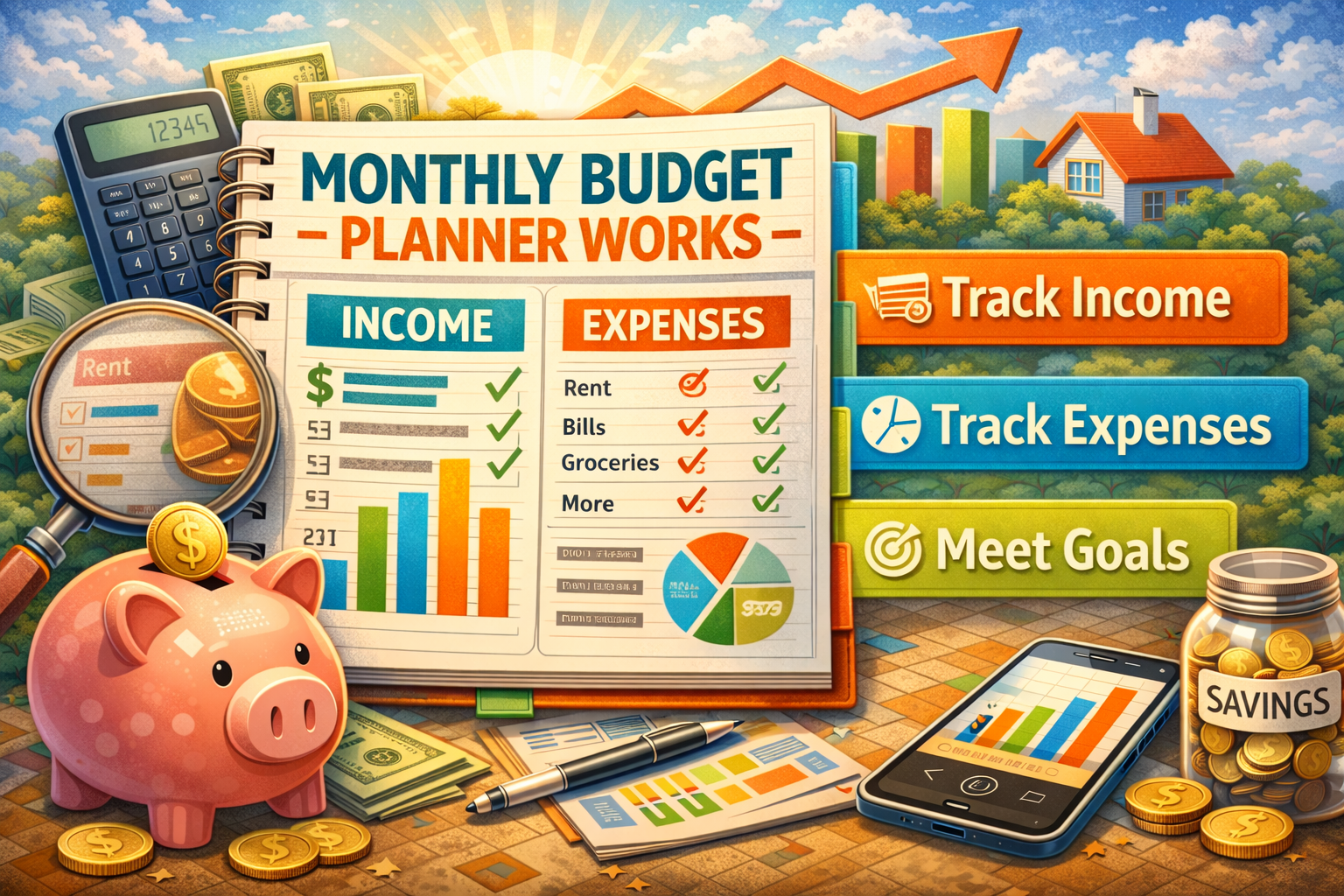
A monthly budgeting system usually includes:
Income Tracking
Income tracking records:
- salary
- freelance income
- business income
- side hustle earnings
- passive income
Expense Tracking
Expense categories often include:
- rent or mortgage
- groceries
- transportation
- subscriptions
- entertainment
- utilities
- insurance
- savings
Savings Goals
Savings sections help users plan for:
- emergency funds
- travel
- investments
- future purchases
- financial security
Financial Planning
Budget planners often include financial planning tools that help users stay organized throughout the month.
Why Digital Budget Planners Are So Popular
Digital budget planners continue growing in popularity because they simplify financial management.
Unlike paper systems, digital planners:
- are easier to update
- can be accessed quickly
- help automate calculations
- improve organization
- simplify expense tracking
- reduce clutter
Many people prefer digital budget planners because they are convenient and flexible.
The Empowered Budgeting Toolkit was designed to provide practical digital budgeting tools that are easy to use for beginners and experienced planners alike.
How Expense Trackers Improve Financial Habits
Expense tracking is one of the most important parts of budgeting.
Many people assume they know where their money goes each month.
However, small recurring purchases often go unnoticed.
Expense trackers create visibility.
Once spending patterns become clear, people can identify:
- unnecessary spending
- impulse purchases
- emotional spending habits
- overspending categories
- savings opportunities
Tracking expenses does not mean eliminating enjoyment.
Instead, it creates intentional spending.
Intentional spending improves financial control.
The Psychology Behind Better Budgeting
Budgeting is not only about numbers.
It is also about behavior.
Many financial problems come from emotional spending habits.
People often spend money because of:
- stress
- boredom
- convenience
- social pressure
- emotional comfort
- impulse decisions
A budget planner helps create mindfulness around spending.
Mindfulness improves financial decision-making.
When spending becomes intentional, people often feel more in control of their finances.
This creates:
- stronger habits
- better awareness
- reduced financial guilt
- improved confidence
Why Savings Trackers Matter
Saving money becomes easier when progress is visible. Developing better savings habits can improve financial stability over time.
A savings tracker helps users:
- monitor goals
- stay motivated
- visualize progress
- build consistency
- celebrate milestones
Without visibility, saving can feel slow and discouraging.
A savings tracker creates momentum.
Whether the goal is:
- building an emergency fund
- saving for travel
- reducing financial stress
- improving long-term stability
tracking savings progress increases motivation.
Financial Wellness Starts With Organization
Financial wellness is not about perfection.
It is about creating manageable systems.
Many people assume financial improvement requires dramatic lifestyle changes.
In reality, consistent organization often creates the biggest results.
Simple financial organization habits include:
- tracking expenses
- reviewing monthly spending
- setting savings goals
- planning bills ahead of time
- organizing income
- reducing unnecessary purchases
A budget planner helps simplify these habits.
Creating a Realistic Monthly Budget
One of the biggest budgeting mistakes is creating unrealistic plans.
A good budget should feel manageable.
Extreme budgeting often fails because it becomes too restrictive.
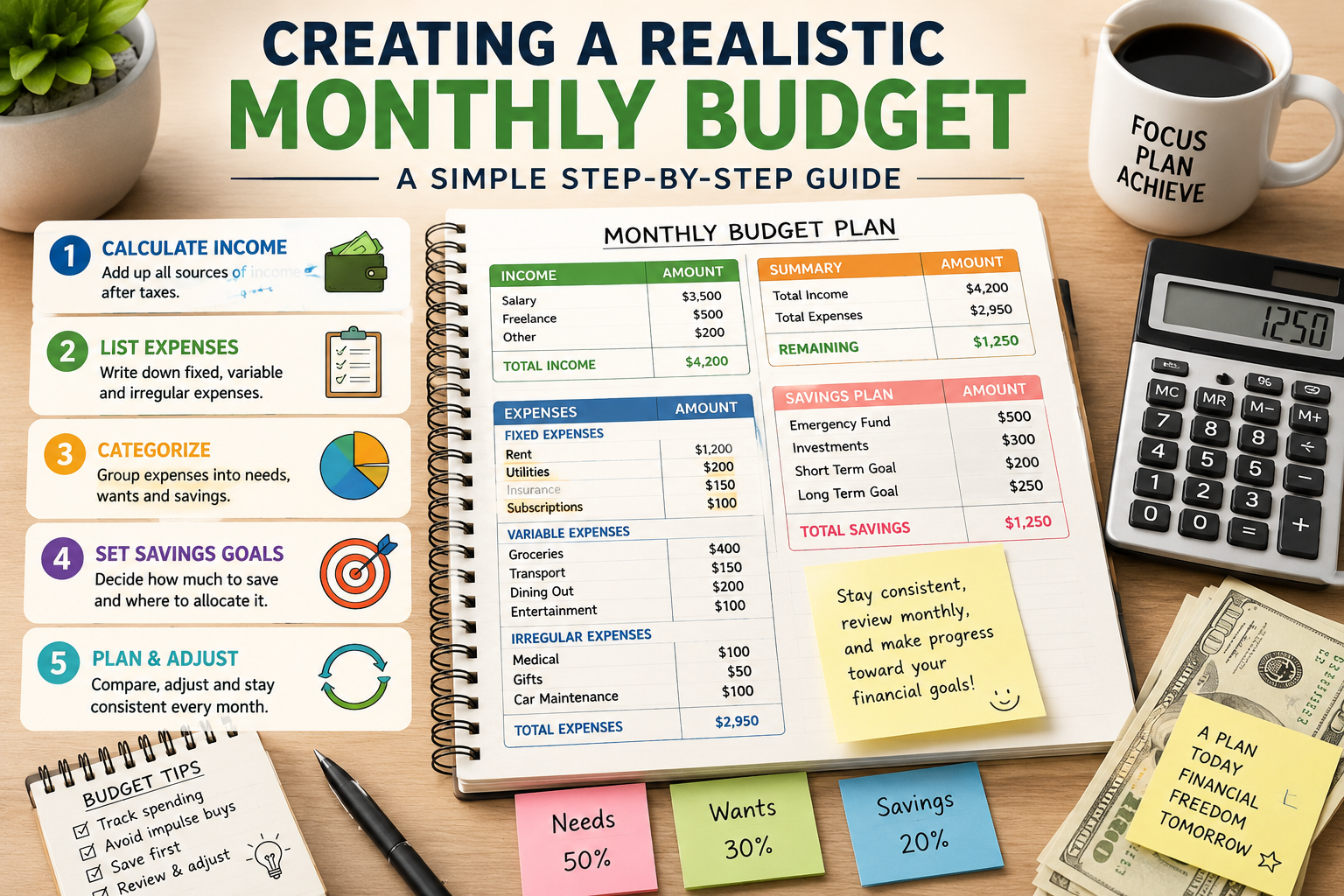
Instead, realistic budgeting focuses on:
- awareness
- consistency
- sustainability
- flexibility
Step 1: Calculate Monthly Income
Start by identifying total monthly income.
Include:
- salary
- freelance income
- side hustles
- additional earnings
Step 2: Identify Fixed Expenses
Fixed expenses include:
- rent
- utilities
- insurance
- subscriptions
- transportation
Step 3: Track Variable Expenses
Variable expenses often include:
- groceries
- entertainment
- shopping
- dining out
- hobbies
Step 4: Set Savings Goals
Savings goals help prioritize future financial security.
Step 5: Review Spending Patterns
Expense tracking helps identify areas where adjustments may improve financial organization.
How Budgeting Improves Long-Term Financial Stability
Financial stability is often built through small consistent habits.
Budgeting helps people:
- spend more intentionally
- save more regularly
- avoid unnecessary debt
- reduce financial stress
- improve planning
Over time, these habits create stronger financial foundations.
A budget planner helps simplify this process by organizing financial information into one clear system.
Why Financial Clarity Reduces Stress
Money stress often comes from uncertainty.
When people feel unsure about:
- expenses
- bills
- savings
- financial priorities
stress levels increase.
Financial clarity creates confidence.
A budgeting system helps reduce uncertainty by making finances more visible and organized.
This can improve:
- peace of mind
- confidence
- planning ability
- spending awareness
- financial decision-making
Budgeting for Beginners
Many people avoid budgeting because they believe it is too complicated.
The truth is that budgeting can be very simple.
The best budgeting systems focus on:
- organization
- simplicity
- consistency
- realistic planning
Beginners often benefit from using templates because templates remove guesswork.
The Empowered Budgeting Toolkit includes structured budgeting resources designed to simplify financial organization for everyday users.
The Importance of Financial Planning Templates
Financial planning templates simplify organization.
Instead of creating systems from scratch, templates provide structure.
This saves time and reduces confusion.
Templates can help organize:
- monthly budgets
- savings goals
- expense tracking
- financial planning
- spending categories
- income organization
Using templates also improves consistency.
Consistency is one of the most important parts of successful budgeting.
Budget Planning for Families
Families often benefit greatly from budgeting systems because household expenses can become difficult to manage without organization.
Family budgeting may include:
- groceries
- childcare
- school expenses
- transportation
- entertainment
- bills
- savings goals
A shared budgeting system improves visibility and communication.
Budgeting for Young Professionals
Young professionals often face financial pressure from:
- rent
- student loans
- transportation
- career expenses
- lifestyle spending
Budget planners help create structure during financially demanding stages of life.
Learning financial organization early can improve long-term money management habits.
How Budgeting Supports Financial Goals
Financial goals become easier to achieve when progress is organized.
Goals may include:
- building savings
- reducing debt
- planning travel
- improving spending habits
- creating emergency funds
A budget planner helps connect daily financial behavior to long-term priorities.
This improves consistency and motivation.
Why Simple Budgeting Systems Work Best
Complicated budgeting systems often fail because they become difficult to maintain.
Simple budgeting systems are usually more effective because they are:
- easier to understand
- easier to follow
- easier to maintain
- less overwhelming
Simplicity improves consistency.
Consistency improves results.
Building Better Money Habits
Strong financial habits usually develop slowly. Learning proven money management strategies can help improve consistency and long-term financial organization.
Budgeting encourages:
- intentional spending
- savings awareness
- monthly planning
- financial organization
- spending accountability
Over time, these habits create stronger financial confidence.
A budgeting toolkit helps support these routines by simplifying organization.
Why Monthly Expense Tracking Matters
Monthly expense tracking helps identify:
- unnecessary purchases
- overspending categories
- changing spending habits
- financial patterns
Expense visibility improves awareness.
Awareness improves decision-making.
Even small spending adjustments can create meaningful financial improvements over time.
The Role of Financial Wellness in Everyday Life
Financial wellness affects many areas of life.
Financial stress can impact:
- relationships
- confidence
- productivity
- emotional wellbeing
- planning ability
Organized financial systems help reduce overwhelm.
A budget planner creates structure that supports healthier financial habits.
Why Budgeting Is About Freedom, Not Restriction
Many people incorrectly believe budgeting removes freedom.
In reality, budgeting often creates more freedom because it improves financial awareness.
When people understand their finances clearly, they can make spending decisions with greater confidence.
Budgeting creates intentional financial choices.
Intentional choices improve financial control.
The Growing Popularity of Digital Financial Planning Tools
Digital financial planning tools continue growing because people want:
- convenience
- simplicity
- organization
- flexibility
Digital budgeting systems make it easier to:
- update financial information
- track progress
- organize expenses
- monitor savings
- review financial habits
The Empowered Budgeting Toolkit combines practical planning tools into one organized digital system designed to simplify financial management.
How Financial Organization Improves Confidence
Confidence often grows when uncertainty decreases.
Financial organization creates:
- clarity
- visibility
- structure
- consistency
When finances feel organized, decision-making becomes easier.
Budget planners help transform financial confusion into financial awareness.
Common Budgeting Mistakes to Avoid
Setting Unrealistic Goals
Overly strict budgets often fail because they become difficult to maintain.
Ignoring Small Purchases
Small recurring expenses can create significant financial impact over time.
Not Tracking Expenses
Without expense tracking, financial awareness becomes limited.
Forgetting Savings Goals
Savings should be included as part of monthly planning.
Giving Up Too Quickly
Financial habits improve through consistency.
Budgeting is a long-term process.
Why Financial Simplicity Matters
Complicated financial systems can increase overwhelm.
Simple systems are easier to maintain consistently.
A budgeting toolkit should simplify financial organization rather than create additional stress.
The Empowered Budgeting Toolkit focuses on practical organization tools that help make financial management easier to understand and maintain.
The Connection Between Organization and Savings
Financial organization often improves savings naturally.
When spending becomes visible, it becomes easier to identify opportunities for improvement.
Many people discover they can save more simply by improving awareness.
Savings systems work best when they become part of regular financial routines.
How Budgeting Supports Long-Term Financial Wellness
Long-term financial wellness usually comes from:
- consistency
- awareness
- planning
- organization
- intentional spending
A budget planner supports these habits by creating structure.
Over time, financial organization can help reduce stress and improve confidence.
Why Budget Templates Save Time
Budget templates reduce the need to build financial systems from scratch.
Templates simplify:
- setup
- organization
- tracking
- planning
- budgeting routines
This makes budgeting more approachable for beginners.
Financial Planning for Everyday Life
Learning personal finance basics shows that financial planning is not only for investors or financial experts.
Everyday financial planning can include:
- organizing bills
- tracking spending
- saving money
- planning goals
- improving financial habits
Simple financial systems can create meaningful improvements over time.
The Value of an All-in-One Budgeting Toolkit
Using separate spreadsheets, notes, apps, and trackers can become confusing.
An all-in-one budgeting toolkit simplifies financial organization by combining important planning tools into one structured system.
This improves:
- organization
- consistency
- convenience
- usability
The Empowered Budgeting Toolkit was designed to help users simplify budgeting, savings tracking, and financial planning through practical digital tools.
How Financial Awareness Changes Spending Behavior
Awareness is one of the strongest financial improvement tools.
When spending becomes visible, people often make more intentional choices automatically.
Expense tracking creates:
- accountability
- awareness
- spending visibility
- financial mindfulness
These habits help improve long-term money management.
Why People Struggle With Budgeting Consistency
Many people start budgeting with motivation but stop because systems feel too complicated.
Successful budgeting systems usually focus on:
- simplicity
- flexibility
- realistic expectations
- easy tracking
A practical budget planner should simplify financial organization rather than overwhelm users.
Creating Better Financial Habits Through Organization
Financial organization often improves daily decision-making.
Budgeting encourages:
- planning ahead
- tracking expenses
- monitoring savings
- reducing unnecessary purchases
- improving awareness
These habits become easier over time through consistency.
Why Budgeting Is an Important Life Skill
Budgeting is one of the most valuable life skills because it affects:
- spending habits
- savings ability
- stress management
- planning confidence
- financial organization
Learning to manage money effectively creates stronger long-term stability.
A budget planner helps simplify this process through structured organization, making it easier to build sustainable financial habits, improve monthly planning, and create a more organized relationship with money over time.
When budgeting becomes simple and consistent, financial management feels less stressful and more achievable. That is why practical budgeting systems continue helping people improve financial clarity, savings awareness, and long-term financial confidence.
Financial Planning Does Not Need to Feel Overwhelming
Many people avoid budgeting because they assume financial planning must be complicated.
In reality, simple systems often work best.
The goal of budgeting is not perfection.
The goal is awareness and organization.
A budgeting toolkit helps create manageable systems that support better financial habits over time.
Why Digital Budget Planners Continue Growing in Popularity
More people are turning to digital budget planners because they provide:
- convenience
- accessibility
- organization
- easy updates
- simple financial tracking
Digital planning tools make it easier to maintain financial routines consistently.
This is one reason budgeting templates and expense trackers continue becoming more popular online.
How the Empowered Budgeting Toolkit Supports Financial Organization
The Empowered Budgeting Toolkit was created to simplify financial planning through organized digital resources designed for everyday money management.
The toolkit includes practical budgeting tools that help users:
- organize monthly finances
- track expenses
- monitor savings goals
- improve budgeting habits
- simplify financial planning
- create stronger financial routines
Instead of feeling overwhelmed by financial organization, users can follow structured planning systems designed to improve clarity and consistency.
Final Thoughts on Using a Budget Planner
Financial organization becomes easier when money management systems are simple, practical, and consistent.
A budget planner helps create visibility around spending, savings, financial goals, and monthly expenses.
Instead of feeling overwhelmed by finances, organized budgeting systems create structure and clarity.
The Empowered Budgeting Toolkit combines budgeting templates, expense tracking tools, savings systems, and financial organization resources into one practical digital planning solution.
Whether you want to improve spending awareness, organize monthly expenses, build better financial habits, or simplify money management, a structured budgeting system can help support long-term financial wellness and greater financial confidence.
Financial success does not usually come from perfection. It often comes from building simple routines that improve consistency over time.
Small financial improvements can create meaningful long-term results when spending becomes more intentional and savings become more organized.
Using a budget planner helps simplify financial management by creating a clear system for tracking expenses, organizing priorities, and improving money habits.
When finances feel organized, decision-making becomes easier, stress often decreases, and financial confidence can continue growing month after month.
The Empowered Budgeting Toolkit was designed to support that process through practical budgeting templates, savings trackers, expense organization tools, and financial planning resources that help simplify everyday money management.
A strong budgeting system is not about restriction.
It is about creating financial clarity, improving awareness, and building a healthier relationship with money through better organization and consistent planning.
Comments
For the reason that the admin of this site is working, no uncertainty very quickly it will be renowned, due to its quality contents.